
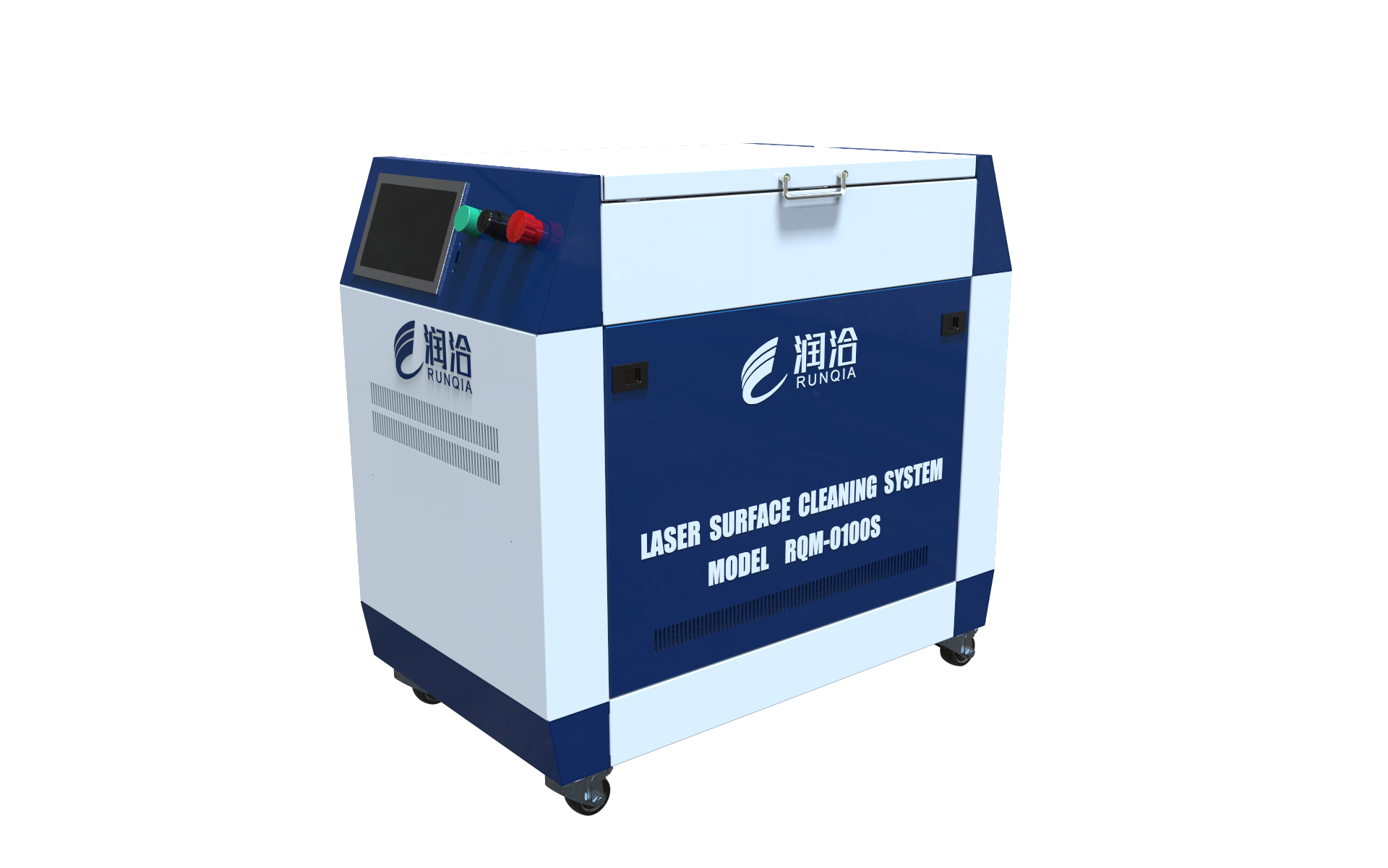
Cultural relic cleaning equipment
Laser cleaning machine: mold laser cleaning machine | mold laser cleaning machine | cultural relic laser cleaning machine | probe laser cleaning machine | laser probe cleaning machine | cultural relic laser cleaning machine | handheld laser cleaning machine | strap laser cleaning machine | mobile laser cleaning machine |
Laser cleaning performance: laser cleaning equipment is a new generation of high-tech products for surface cleaning. Runqia is a company that produces optical fiber coupling, portable, movable or workstation type laser cleaning equipment. It provides strap type low-power cleaning machines as small as 20 watts, as high as 1000 watts and workstation or customized cleaning systems, which can meet your various application needs.
Laser cleaning technology:
◆ fast and concentrated pulse (1 / 10000 second) impacts with great power (dozens of Mio. W) and vaporizes the residue on the surface; ◆ the laser pulse is very suitable for the removal of organic substances, such as dirt left in the tire mold; ◆ short time impact will not heat the metal surface and will not damage the substrate.
Advantages of laser cleaning:
◆ clean or remove the surface paint layer quickly and smoothly; ◆ accurate cleaning and paint removal effect; ◆ no damage to the substrate; ◆ low cost; ◆ fast investment recovery; ◆ no need for sand blasting or chemicals; ◆ no erection time is required for equipment use; ◆ no noise; ◆ there is little need for maintenance.
Mold laser cleaning machine
◆ the most advanced and environmentally friendly cleaning equipment in the contemporary era ◆ save water resources ◆ consume about 1 degree of electricity per hour ◆ restore the natural color of metal
Applicable to: all kinds of mold cleaning, such as: plastic mold, rubber mold, optical mold; It is also applicable to degreasing, derusting and paint removal of metal parts and hardware tools.
There are various cleaning methods in traditional cleaning industry, mostly using chemical agents and mechanical methods. With the increasingly strict requirements of China's environmental protection laws and regulations and the increasing awareness of people's environmental protection and safety, the types of chemicals that can be used in industrial production cleaning will become less and less. How to find a cleaner and non-destructive cleaning method is a problem we have to consider. Laser cleaning has the characteristics of no grinding, non-contact, no thermal effect and suitable for all kinds of objects. It is considered to be the most reliable and effective solution. At the same time, laser cleaning can solve the problems that cannot be solved by traditional cleaning methods.
For example, when there are submicron pollution particles on the surface of the workpiece, these particles often stick very tightly, which can not be removed by conventional cleaning methods, while cleaning the surface of the workpiece with nano laser radiation is very effective. In addition, because the laser is non-contact cleaning to the workpiece, it is very safe to clean the precision workpiece or its fine parts, which can ensure its accuracy. Therefore, laser cleaning has unique advantages in the cleaning industry.
Why can lasers be used for cleaning? Why won't it cause damage to the cleaned object? First, understand the essence of laser. In short, the laser is no different from the accompanying light (visible light and invisible light) around us, but the laser uses a resonator to concentrate the light in the same direction, and has better performance than simple wavelength and coordination. Therefore, theoretically, all wavelengths of light can be used to form a laser, However, in fact, there are few media that can be excited, so the laser light source that can produce stable and suitable for industrial production is quite limited. Nd: YAG laser, carbon dioxide laser and excimer laser are widely used. Because Nd: YAG laser can be transmitted through optical fiber and is more suitable for industrial application, it is also widely used in laser cleaning.
Advantages of laser surface cleaning
Compared with traditional cleaning methods such as mechanical friction cleaning, chemical corrosion cleaning, liquid solid strong impact cleaning and high-frequency ultrasonic cleaning, laser cleaning has obvious advantages.
A laser cleaning is a "green" cleaning method, which does not need to use any chemical agent and cleaning solution. The cleaned waste is basically solid powder, small in volume, easy to store and recyclable, which can easily solve the environmental pollution caused by chemical cleaning;
B the traditional cleaning method is often contact cleaning, which has mechanical force on the surface of the cleaned object, damages the surface of the object or the cleaning medium is attached to the surface of the cleaned object, which cannot be removed and produces secondary pollution. The non grinding and non-contact of laser cleaning can solve these problems;
C laser can be transmitted through optical fiber and cooperate with manipulator and robot to realize remote operation conveniently. It can clean parts that are not easy to reach by traditional methods, which can ensure personnel safety in some dangerous places;
D laser cleaning can remove various types of pollutants on the surface of various materials and achieve the cleanliness that conventional cleaning cannot achieve. It can also selectively clean the pollutants on the material surface without damaging the material surface;
E high laser cleaning efficiency and time saving;
F although the one-time investment in the purchase of laser cleaning system is high in the early stage, the cleaning system can be used stably for a long time and has low operation cost. Taking the laser cleaning machine of our company as an example, the operation cost per hour is only about 1 yuan. More importantly, it can easily realize automatic operation.
Principle of laser surface cleaning
The process of pulsed Nd: YAG laser cleaning depends on the characteristics of the optical pulse generated by the laser and is based on the photophysical reaction caused by the interaction between high-intensity beam, short pulse laser and pollution layer. Its physical principle can be summarized as follows:
A the beam emitted by the laser is absorbed by the contaminated layer on the surface to be treated.
B the absorption of large energy forms a rapidly expanding plasma (highly ionized unstable gas) and generates shock waves.
C. the shock wave turns the pollutants into fragments and is removed.
D the light pulse width must be short enough to avoid the accumulation of heat that destroys the treated surface.
E experiments show that when there are oxides on the metal surface, the plasma occurs on the metal surface.
Plasma is produced only when the energy density is higher than the threshold, which depends on the polluted layer or oxide layer removed. In this case, it is very important to ensure the safety of the substrate. There is also a second threshold of plasma. If the energy density exceeds this threshold, the base material will be destroyed. In order to effectively clean the base material on the premise of ensuring the safety of the base material, the laser parameters must be adjusted according to the situation, so that the energy density of the optical pulse is strictly between the two thresholds.
Each laser pulse removes a certain thickness of pollution layer. If the contaminated layer is thick, multiple pulses are required for cleaning. The number of pulses required to clean the surface depends on the degree of surface contamination. An important result of the two thresholds is the self-control of cleaning. Light pulses with an energy density higher than the first threshold will remove contaminants until the base material is reached. However, because its energy density is lower than the failure threshold of the substrate material, the substrate will not be damaged.
Practical application of laser cleaning
Laser cleaning can be used not only to clean organic pollutants, but also to clean inorganic substances, including metal corrosion, metal particles, dust and so on. Here are some practical applications. These technologies are very mature and have been widely used.
A mold cleaning: hundreds of millions of tires are manufactured by tire manufacturers all over the world every year. The cleaning of tire molds in the production process must be rapid and reliable to save downtime. Traditional cleaning methods include sand blasting, ultrasonic or carbon dioxide cleaning, but these methods usually have to be moved to the cleaning equipment for cleaning after the high heat mold is cooled for several hours. The cleaning takes a long time and is easy to damage the accuracy of the mold. Chemical solvents and noise will also produce problems such as safety and environmental protection. Using the laser cleaning method, because the laser can be transmitted by optical fiber, it has deep elasticity in use; Because the laser cleaning method can be connected by optical fiber to guide the light to the dead corner of the mold or the part that is not easy to remove for cleaning, it is convenient to use; Since the rubber is not gasified, it will not produce toxic gas and affect the safety of the working environment. The technology of laser cleaning tire mold has been widely used in European and American tire industry. Although the initial investment cost is high, the benefits obtained in saving standby time, avoiding mold damage, working safety and saving raw materials can be quickly recovered.
The laser cleaning test carried out on the production line of Shanghai shuangqian truck tire company shows that a set of large truck tire molds can be cleaned online in only 2 hours. Compared with conventional cleaning methods, the economic benefits are obvious.
The anti stick elastic film on the mold of food industry needs to be replaced regularly to ensure hygiene. Laser cleaning without chemical reagent is also particularly suitable for this application.
B cleaning of weapons and equipment: laser cleaning technology is widely used in weapon maintenance. The laser cleaning system can remove rust and pollutants efficiently and quickly, and select the removal parts to realize the automation of cleaning. Using laser cleaning, not only the cleanliness is higher than that of chemical cleaning process, but also there is almost no damage to the object surface.
By setting different parameters, a dense oxide protective film or metal melting layer can also be formed on the surface of metal objects to improve the surface strength and corrosion resistance. The waste removed by laser basically does not pollute the environment. It can also be operated remotely, effectively reducing the damage to the health of operators.
C removal of old aircraft paint: in Europe, laser cleaning system has long been used in aviation industry. The surface of the aircraft needs to be repainted after a certain period of time, but the original old paint needs to be completely removed before painting. The traditional mechanical paint removal method is easy to damage the metal surface of the aircraft and bring hidden dangers to safe flight. If multiple laser cleaning systems are used, the paint layer on the surface of an A320 Airbus can be completely removed within two days without damaging the metal surface.
D cleaning of building exterior wall: with the rapid development of China's economy, more and more skyscrapers have been established, and the cleaning problem of building exterior wall has become increasingly prominent. The laser cleaning system provides a good solution to the cleaning of building exterior wall through the optical fiber with the longest length of 70 meters. It can effectively clean all kinds of pollutants on all kinds of stone, metal and glass, And the cleaning efficiency is many times higher than that of conventional cleaning. It can also remove black spots and color spots on various stone materials of buildings. The cleaning test of the laser cleaning system on buildings and stone tablets shows that the effect of laser cleaning on protecting ancient buildings and restoring their appearance is very good.
E cleaning in the electronic industry: the electronic industry uses laser to remove oxides: the electronic industry needs high-precision decontamination, which is especially suitable for laser to remove oxides. Before welding the circuit board, the component pins must be completely de oxidized to ensure the best electrical contact, and the pins must not be damaged during the decontamination process. Laser cleaning can meet the use requirements, and the efficiency is very high. One pin only needs to irradiate the laser once.
F precise degreasing cleaning in the precision machinery industry: the precision machinery industry often needs to remove the esters and mineral oils used for lubrication and corrosion resistance on the parts, usually by chemical methods, and chemical cleaning often still has residues. Laser deasterification can completely remove esters and mineral oil without damaging the surface of parts. The pollutant removal is completed by shock wave. The explosive gasification of thin oxide layer on the surface of parts forms shock wave, which leads to pollutant removal rather than mechanical interaction. The material is thoroughly de esterified, which is used for the cleaning of mechanical parts in aerospace industry.
Laser cleaning can also be used to remove oil esters in machining of mechanical parts.
G. pipeline cleaning in the reactor of nuclear power plant: the laser cleaning system is also used to clean the pipeline in the reactor of nuclear power plant. It adopts optical fiber to introduce high-power laser beam into the reactor to directly remove radioactive dust, and the cleaned materials are easy to clean. Moreover, due to the remote operation, the safety of staff can be ensured.
To sum up, laser cleaning plays an important role in many fields, and can play an important role in automobile manufacturing, semiconductor wafer cleaning, precision parts processing and manufacturing, military equipment cleaning, building exterior wall cleaning, cultural relics protection, circuit board cleaning, precision parts processing and manufacturing, LCD cleaning, chewing gum residue removal and other fields.
technical parameter
contact us
Business negotiation, looking for partners, join us